
Last updated August 25, 2026
Free on-site gate assessment - hinges, posts, and your LiftMaster or Nice gate operator checked before anything is quoted
The assessment is free and the quote is the invoice.
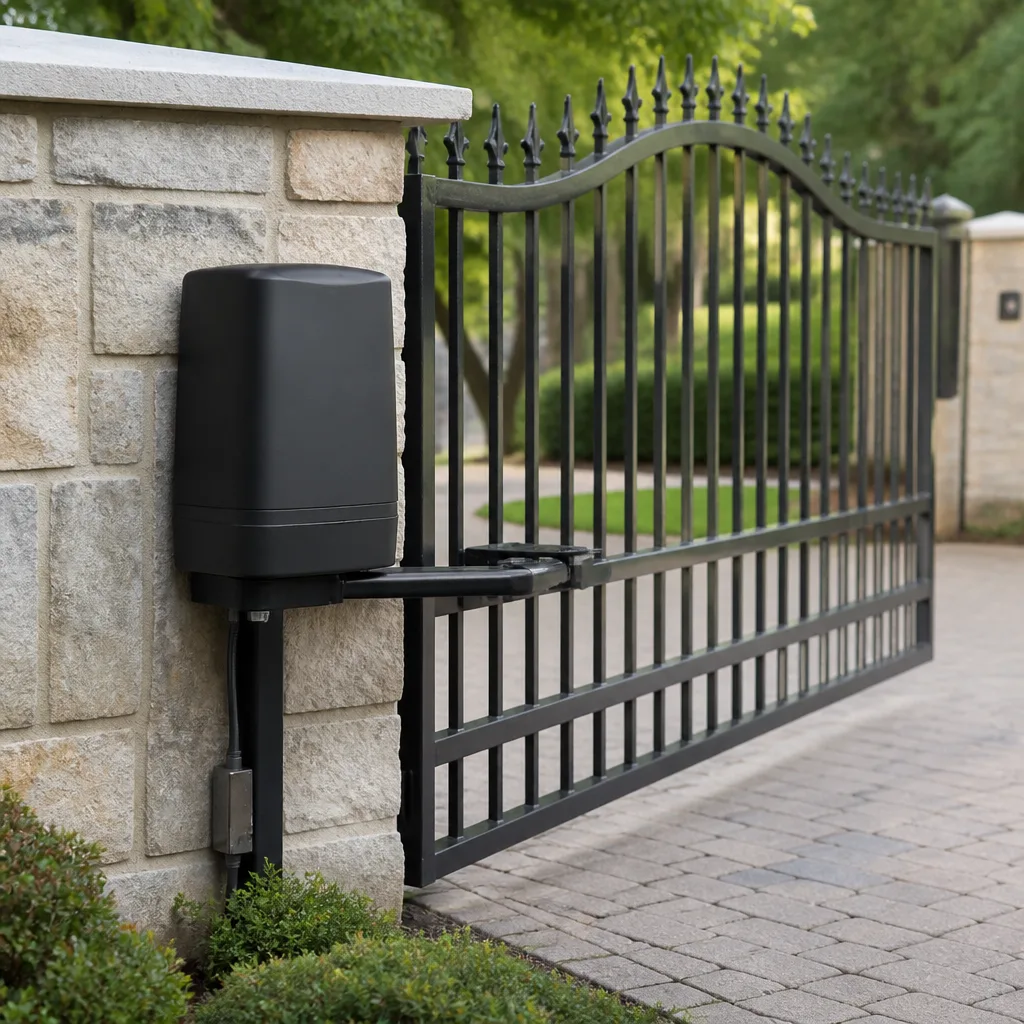
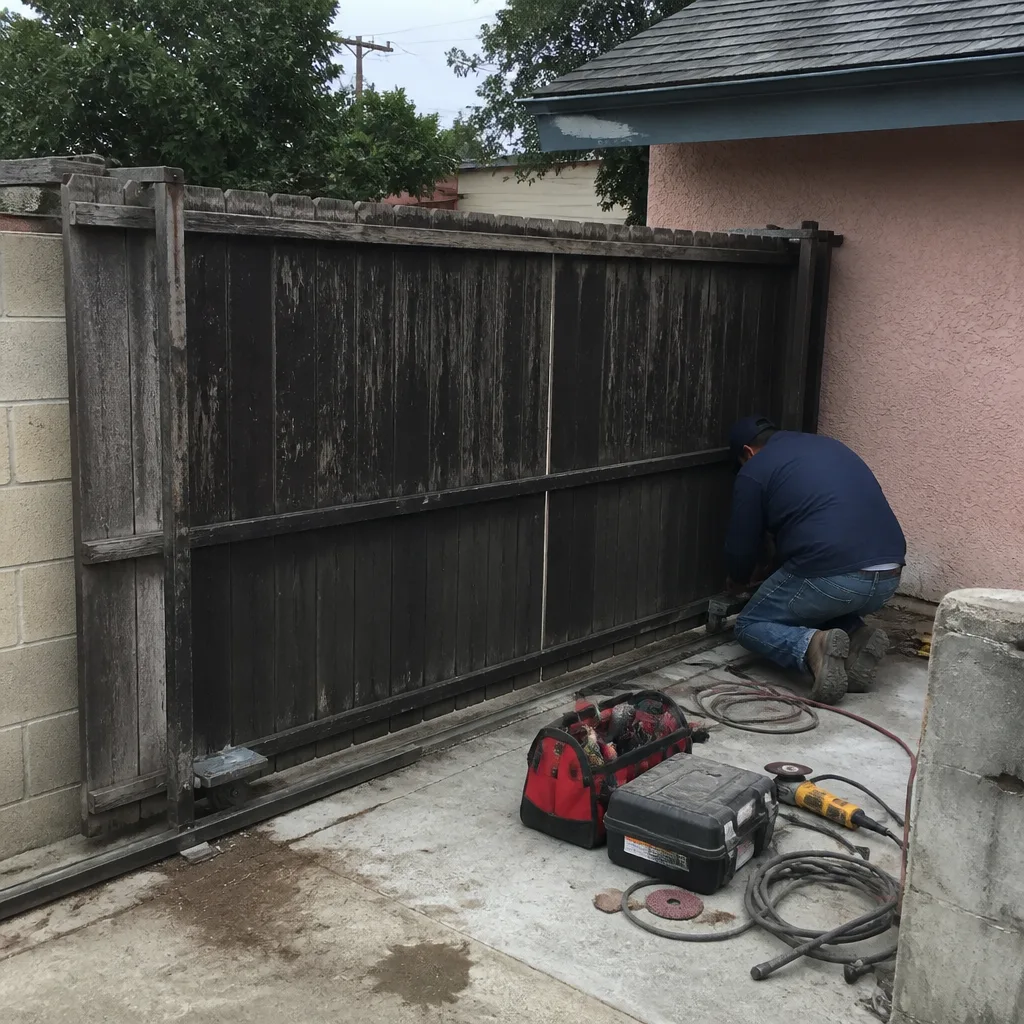 Before
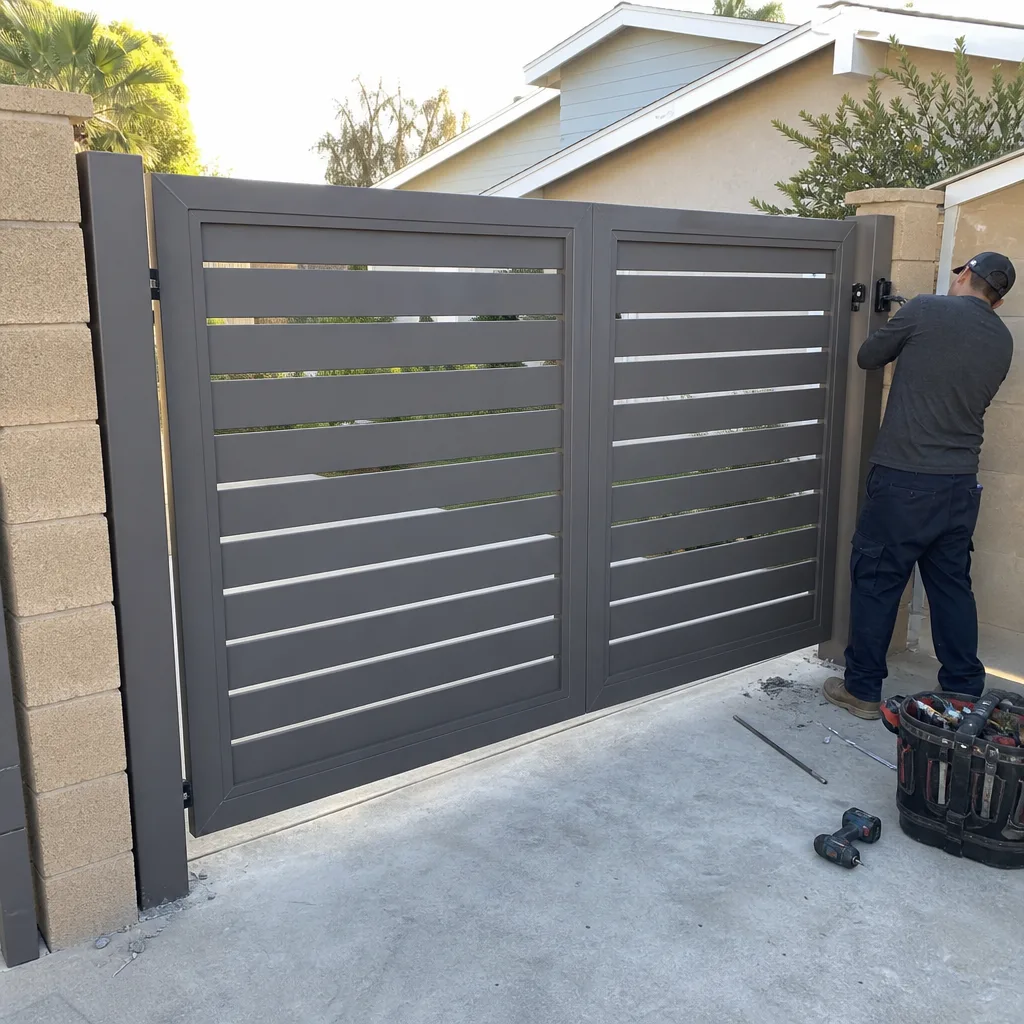 After
After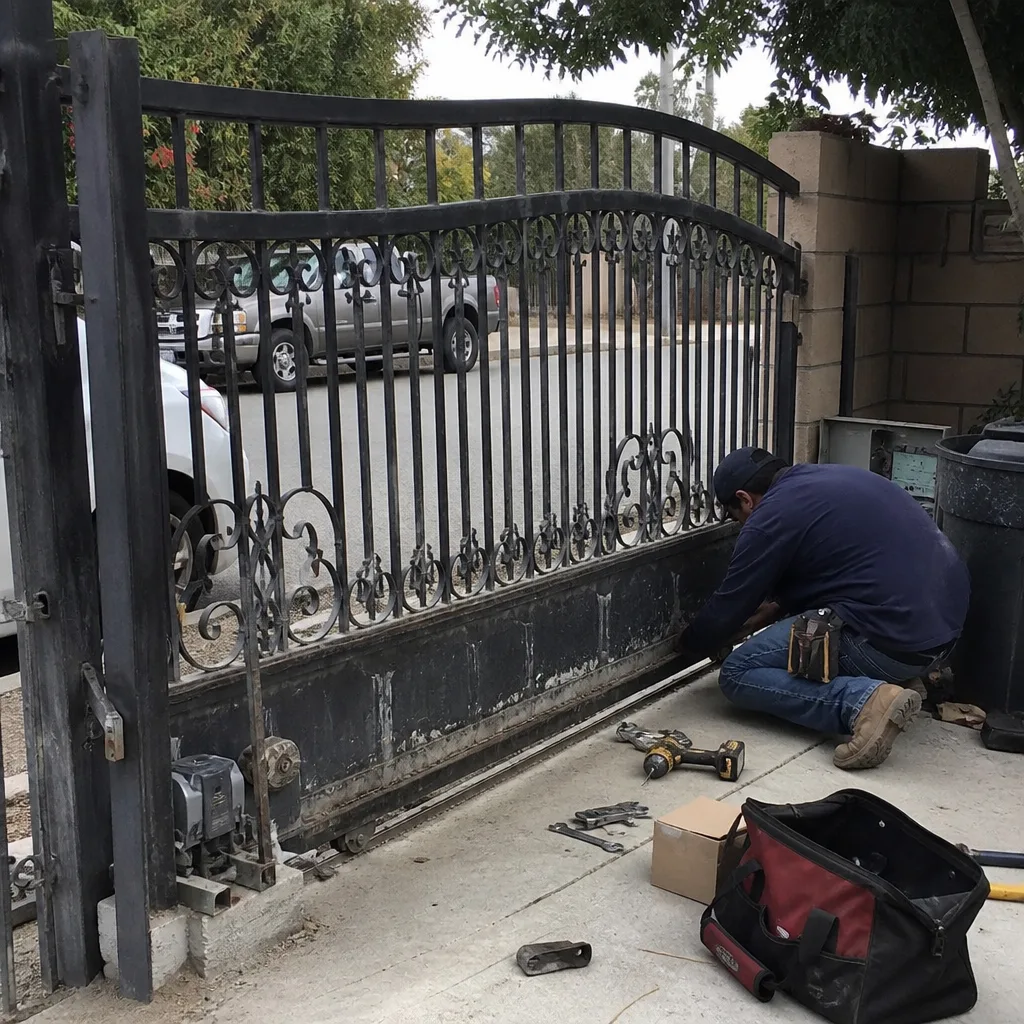 Before
 After
After Before
 After
AfterSeasonal Gate Repair Care for Cerritos: Year-Round Homeowner’s Guide
Here’s something most Cerritos homeowners don’t realize until it’s too late: your driveway gate moves more in a single year than your car door does in a decade. Every open-and-close cycle wears hinges, stresses welds, and works the motor. In Cerritos, where summer heat bakes metal and winter damp creeps into electrical contacts, that wear follows a predictable seasonal rhythm. This guide covers what to check, when to check it, and what actually needs attention versus what can wait. You’ll learn the seasonal maintenance calendar we recommend after servicing thousands of gates across Cerritos, the specific ways local weather attacks gate hardware, and what you can safely handle yourself without ever touching a tension spring or a live wire.
Quick Answer
Seasonal gate care in Cerritos means four targeted checkups per year: spring (lubrication and hinge inspection after winter rain), summer (heat-related motor and sensor checks), fall (track cleaning and alignment before the Santa Ana winds), and winter (battery backup testing and moisture sealing). Most seasonal maintenance takes under an hour, costs little when caught early, and prevents the two most common Cerritos gate failures we see: seized hinges from coastal moisture and fried control boards from heat buildup inside enclosed motor housings.
Table of Contents
- Why Cerritos Weather Is Harder on Gates Than You’d Think
- Spring Maintenance: Recovering from Winter Rain
- Summer Maintenance: Heat, Sensors, and Motor Strain
- Fall Maintenance: Santa Ana Winds and Track Alignment
- Winter Maintenance: Moisture, Batteries, and Cold Starts
- The 5-Minute Monthly Walkaround
- Common Mistakes to Avoid
- When to Call a Professional
- Frequently Asked Questions
- The Bottom Line
Why Cerritos Weather Is Harder on Gates Than You’d Think
Cerritos sits in a climate pocket that doesn’t announce itself dramatically. No snow, no hard freezes, no monsoons. What it does have is a steady combination of marine-layer moisture, summer heat spikes into the 90s, and autumn Santa Ana winds that push dust into everything. That mix creates two specific problems for gate hardware. First, morning fog and coastal humidity cause oxidation on hinges, brackets, and exposed steel, especially on north-facing gates that never fully dry. Second, summer heat doesn’t just bake the metal, it expands it. A gate that swings freely on a 70-degree morning can bind on its hinges at 95 degrees by 3 p.m. We see this pattern repeated across neighborhoods in Cerritos every July and August. Homes that have stood since the 1970s and 1980s, like much of the original Cerritos tract housing, often have gates whose original posts have shifted slightly over decades. That settlement combines with thermal expansion to create binding that gets misdiagnosed as a motor problem. Usually, it’s not the motor. It’s geometry.
The other local factor is soil movement. Cerritos sits on a mix of sedimentary soil and former wetlands. Seasonal moisture changes cause the ground to expand and contract enough to move gate posts a fraction of an inch. That fraction matters when your gate’s clearance tolerances are measured in eighths of an inch. This is why we recommend post alignment checks twice a year, not because posts fail, but because the ground they sit in changes with the seasons more than most inland cities.
Spring Maintenance: Recovering from Winter Rain
Spring is when Cerritos gates start showing the damage winter left behind. Once the rainy season tapers off in March and April, take an hour to work through these checks. The goal is to find moisture damage before it becomes structural.
Spring Checklist
- Hinge inspection: Open and close the gate slowly. Watch each hinge point. Any vertical movement or grinding means bushing wear. A gate that moves more than a quarter inch at the free end when pushed sideways needs hinge attention.
- Rust assessment: Look at the bottom 6 inches of each gate leaf and all bolt heads. Surface rust is cosmetic. Bubbling paint or flaking metal needs wire brushing and repainting before it spreads.
- Drainage check: Walk the gate track or the swing path after a rain. Standing water anywhere near the posts accelerates corrosion. Clear debris from drainage channels and check that soil hasn’t built up against the gate’s base.
- Operator housing inspection: Open the motor cover. Look for condensation, corrosion on terminals, or insect nests. Paper wasps love gate operator housings, and their nests cause shorts and sensor failures.
- Photo-eye alignment: Winter ground movement shifts low-mounted photo-eye sensors. Test by passing a hand in front of each sensor while the gate idles. The gate should stop and reverse.
One Cerritos-specific spring issue we see repeatedly is moisture wicking up through concrete gate posts on properties with sprinkler systems pointed at the gate. If your lawn sprinklers spray onto the gate or its posts, adjust them to miss by 6 inches. This single change reduces hinge corrosion noticeably.
Spring is also the right time to schedule a seasonal tune-up if the gate has been sluggish through winter. The $89 Seasonal Tune-Up covers lubrication, alignment, and sensor testing, and catches problems when they’re still inexpensive.
Summer Maintenance: Heat, Sensors, and Motor Strain
Summer heat in Cerritos does two things to gate systems. It stresses the motor with repeated thermal cycling, and it plays tricks on sensors. August is our busiest month for no-opens and erratic behavior, and the cause is rarely what homeowners assume.
What Heat Actually Does to Gate Hardware
Most modern gate operators, including FAAC, BFT, Linear, and Viking units, have thermal protection circuits. When internal temperatures exceed safe limits, the circuit interrupts operation until the unit cools. This is not a failure. It’s protection. But it feels like a failure when the gate won’t move at 2 p.m. on a Saturday. The fix is not replacing the motor, it’s improving ventilation inside the operator housing.
Heat also expands the gate itself. Steel and aluminum expand at different rates. A gate with steel leaves on aluminum hinges, or vice versa, binds in heat as the metals fight each other. The symptom is a gate that works fine in the morning and afternoon but scrapes or stalls during peak heat. The solution is hinge adjustment and clearance tuning, which is an afternoon’s work, not a gate replacement.
Summer-Specific Checks
- Ventilation: Check that the motor housing has clear air intake and exhaust. Trim any new plant growth that blocks airflow. Cerritos gardens grow hard in summer, and a bougainvillea wrapped around a pillar motor housing is a common sight.
- Capacitor check: Humming without movement during hot weather often signals a failing start capacitor. This is a $40-$80 part. Ignoring it burns out the motor. Replacing it is a ten-minute job for someone who knows what they’re doing.
- Sensor sun-shielding: Low sun angles at dawn and dusk can blind photo-eye sensors. If your gate behaves differently in direct sunlight, add a small shade hood to the sensor. This is a three-dollar fix that prevents a lot of head-scratching.
- Limit switch drift: Heat cycles stretch chains and belts slightly. If your gate now stops 2 inches short or overtravels, the limit switches need a seasonal adjustment.
In Cerritos neighborhoods like South of Artesia or near Cerritos Regional Park, where yards are deep and gates run long distances, we see more heat-related chain stretch than in compact front-yard installations. The longer the travel, the more expansion there is to absorb.
Fall Maintenance: Santa Ana Winds and Track Alignment
Fall is the most overlooked season for gate maintenance in Cerritos, and it’s the one that most directly predicts how your gate survives the year. The Santa Ana winds that blow in from the desert carry fine dust and push against gates with sustained force. A gate that’s slightly out of alignment in September becomes badly out of alignment by November.
Fall Alignment and Cleaning Routine
- Track and rail cleaning: For sliding gates, remove all debris from the track channel. Use a stiff brush to clear compacted dust. Cerritos wind patterns push dust into the track from the northeast, so pay attention to the windward end.
- Cable and chain tensioning: Chains stretch over time. A loose chain slaps, jumps teeth, and wears sprockets. The tension should be taut with roughly half an inch of play. If you’re not sure how to measure it, this is a two-minute check during any service visit.
- Wheel and roller inspection: Rollers with flat spots or seized bearings cause grinding and jerky movement. Spin each roller by hand. Any that don’t roll freely need replacement before they score the track.
- Post alignment verification: With the gate at its closed position, use a level against each post. More than one degree off vertical from any direction means the post has moved. This is a job for a pro, but catching it early prevents a snapped hinge or a split post.
- Wind-load check: Open the gate halfway and let go. If it drifts, wind is already exposing alignment issues. If it stands, your geometry is holding.
Santa Ana winds also carry debris that jams gate tracks and photo-eye lenses. A leaf caught against a photo-eye sensor reads as an obstruction, and the gate refuses to close. Before calling for repair, wipe the sensor lenses clean with a dry cloth. We can’t count how many Cerritos no-close calls in October were solved this way.
Winter Maintenance: Moisture, Batteries, and Cold Starts
Cerritos winters are mild by national standards, but the combination of cold nights, morning dew, and occasional heavy rain creates more service requests than any other season. The two biggest winter issues: battery failure in gate operators, and moisture intrusion in control boards.
Battery Backup Testing
Most modern gate systems include a battery backup that powers the gate during outages. The problem is that batteries degrade silently. Power outages in Cerritos are rare but happen during winter storms, and that’s exactly when a five-year-old dead battery reveals itself. Test your battery every fall: unplug the operator and run the gate through two full cycles. If it labors or stops halfway, the battery needs replacement. This is also the time to check battery terminals for corrosion, which gets worse in damp winter air.
Moisture Sealing Checklist
- Control board enclosure: The rubber gasket around the control board cover cracks with age and heat. Once moisture gets in, circuit paths corrode and boards fail. A broken or compressed gasket is a twenty-dollar part that prevents a four-hundred-dollar board replacement.
- Keypad boxes: Keypad enclosures rated for rain still degrade in direct sun. Winter rain follows summer UV damage, so check for hairline cracks that allow water in. Cerritos gets enough winter rain that a cracked keypad box usually fails within one season.
- Underground cable runs: If your gate operator connects to low-voltage wiring run through PVC conduit, winter ground saturation increases the chance of water in the conduit. Symptoms include intermittent operation that correlates with rain. This requires a technician’s diagnostic tools, but mentioning the symptom speeds the fix.
- Ground-clamp inspection: Gate operators need solid electrical grounding. Wet soil usually improves grounding, but winter is when we find corroded ground clamps that have been degrading since summer. A quick visual check under an open operator housing tells you if the ground strap is intact.
Homes near Cerritos High School and in the older subdivisions off 183rd Street have a higher proportion of original gate operators installed in the 1990s and early 2000s. Those units are due for control board and capacitor inspections if they haven’t had one in the last five years. Availability of replacement boards for discontinued Linear and FAAC models has become a real issue, making preventive maintenance more cost-effective than reactive replacement.
The 5-Minute Monthly Walkaround
Seasons are the framework, but monthly habits catch the rest. Here’s the five-minute walkaround we recommend to every Cerritos homeowner. Do it the first weekend of the month.
- Open and close the gate once, standing where you can hear it. Listen for new sounds: grinding, squealing, clicking, or a change in motor pitch. Your ears will catch a failing bearing before your eyes ever do.
- Watch the gate’s leading edge as it seals. It should settle against the stop post or ground plate without bouncing. Bouncing means a limit switch is off or a spring has weakened.
- Check the gate’s sweep path. Look for new obstructions: plant growth, landscaping stones, a kid’s bike. Obstructions are the single most common cause of “my gate stopped working” calls in Cerritos.
- Look at the hinges and bolt heads. Thirty seconds of visual scanning for rust, movement, or missing bolts catches most structural issues before they become failures.
- Press the manual release once per quarter. Not monthly, but when you do: the release mechanism should move freely. A stuck release lever means you can’t open the gate during a power outage, which is exactly when you need it most.
This walkaround takes five minutes and costs nothing. It’s the single highest-value maintenance habit any homeowner can adopt. The Ironworks Gate Co. home team gets calls every week from homeowners who caught a problem early doing exactly this, and the repair was a fraction of what it would have been a month later.
Common Mistakes to Avoid
- Lubricating with WD-40. WD-40 is a solvent and water displacer, not a lubricant. It strips existing grease and leaves metal dry. Use a silicone-based or lithium grease on gate hinges and rollers. WD-40 on a gate hinge makes it worse within weeks.
- Ignoring a slow gate. A gate that opens 20% slower than it used to is telling you something. Motor strain, chain wear, or hinge binding is developing. The slower it gets, the more expensive the eventual failure. Address slowness when you first notice it.
- Leaving sprinklers hitting the gate or posts. This is the most common preventable cause of hinge and post corrosion in Cerritos. Adjust sprinkler heads to keep spray away from all gate metal by at least 6 inches. Your hinges will last years longer.
- Pushing the gate manually without engaging the manual release. Forcing a motor-driven gate by hand strips gears and burns out motors. If the gate has no power, use the manual release first. If you don’t know where it is, now is the time to find it, before an emergency.
- Replacing a dead battery with any 12-volt battery. Gate operator batteries have specific amp-hour ratings and charge profiles. Using an automotive battery risks both fire and permanent damage to the charging circuit. Match the exact battery specification.
- Waiting until the gate fails to replace worn parts. Hinges, rollers, and chains don’t suddenly fail. They degrade slowly and audibly. Replacing a worn roller costs $30-60. Replacing a damaged track and the roller costs hundreds. The math is straightforward.
When to Call a Professional
Some jobs are homeowner maintenance. Some are not. Call a professional when you see or hear any of these: a gate that binds and won’t complete its travel, a motor that hums but doesn’t move, visible cracks in welds or posts, a gate that reverses on its own repeatedly, or any electrical burning smell from the operator housing. These indicate structural or electrical issues that get worse with use and are dangerous to diagnose without the right tools and training. Also call if your gate is more than fifteen years old and has never had a professional inspection. Ironworks Gate Co. offers free estimates in Cerritos. Call (747) 298-3226 and a live person answers, day or night. We will tell you over the phone whether what you’re describing is urgent, routine, or something you can address yourself. No charge for the conversation.
Frequently Asked Questions
Once a year is sufficient for most residential gates in Cerritos, with fall being the ideal season to prepare for winter rain and Santa Ana winds. Older gates over fifteen years or gates used more than 20 cycles per day benefit from twice-yearly service. The $89 seasonal tune-up covers lubrication, alignment, sensor testing, and a visual inspection of all wear components. Call (747) 298-3226 to schedule a tune-up before the next season change.
Standard seasonal gate maintenance in Cerritos runs between $89 and $250 depending on the gate size, type, and condition. Our $89 Seasonal Tune-Up covers the core maintenance items: lubrication, chain tension check, sensor alignment, limit switch verification, and a full safety test. Parts replacements are quoted separately before any work begins. You’ll know the full price before we start, always.
This is almost always thermal expansion affecting gate alignment or a motor’s thermal protection circuit activating. Metal expands in afternoon heat and a gate that was marginally aligned in the morning binds in the afternoon. The fix is hinge adjustment or clearance tuning, not motor replacement. This is one of the most common Cerritos summer service calls we handle, and it’s usually resolved in one visit.
The most likely cause is a photo-eye sensor being triggered intermittently, either by direct sunlight, a leaf or debris blowing across the beam path, or slight misalignment from ground movement. Wipe the sensor lenses clean first. If the problem persists, the sensors likely need realignment or the wiring has a loose connection. We diagnose and fix this in most cases during a single visit.
Not necessarily. We service nine major brands including FAAC, BFT, Linear, and Viking, and many parts remain available for units installed in the 2000s and 2010s. Boards, capacitors, limit switches, and batteries are commonly replaced. New operator installation is a recommendation when the cost of repairs approaches the cost of replacement, and we’ll give you an honest comparison before you spend a dollar. Ask about the free second opinion on any written estimate you’ve received.
Cleaning, visual inspection, sensor lens wiping, and monthly walkaround checks are safe. Anything involving the gate’s electrical system, motor internals, or structural welds should be left to a trained technician. Gate operators carry line voltage and capacitors store charge even after power is disconnected. Springs under tension can release with enough force to cause serious injury. When in doubt, call (747) 298-3226 and describe what you’re seeing. We’ll tell you honestly whether it’s safe to handle yourself.
The Bottom Line
Seasonal gate care in Cerritos is not complicated. Four focused checkups per year, a five-minute monthly walkaround, and a professional tune-up annually will keep any residential gate running smoothly for decades. The specific challenges Cerritos homeowners face come down to marine moisture, summer heat expansion, Santa Ana dust, and mild winter rain. Each attack on gate hardware is predictable, and each has a simple countermeasure. Catching problems early costs a fraction of what emergency repairs cost, and keeps a gate that’s been on your property for twenty years working like the day it was hung. We’ve been serving Cerritos since 2013, and the gates that get maintained seasonally are the ones we rarely hear from. The gates that get ignored are the ones that fail on holiday weekends. Give us a call at (747) 298-3226 for a free estimate, and we’ll help you build a maintenance routine that fits your gate and your property. Free estimates mean the conversation costs you nothing but a few minutes.
Written by Victor Salinas, Owner at Ironworks Gate Co., serving Cerritos since 2013.