
Last updated August 25, 2026
Free on-site gate assessment - hinges, posts, and your LiftMaster or Nice gate operator checked before anything is quoted
The assessment is free and the quote is the invoice.
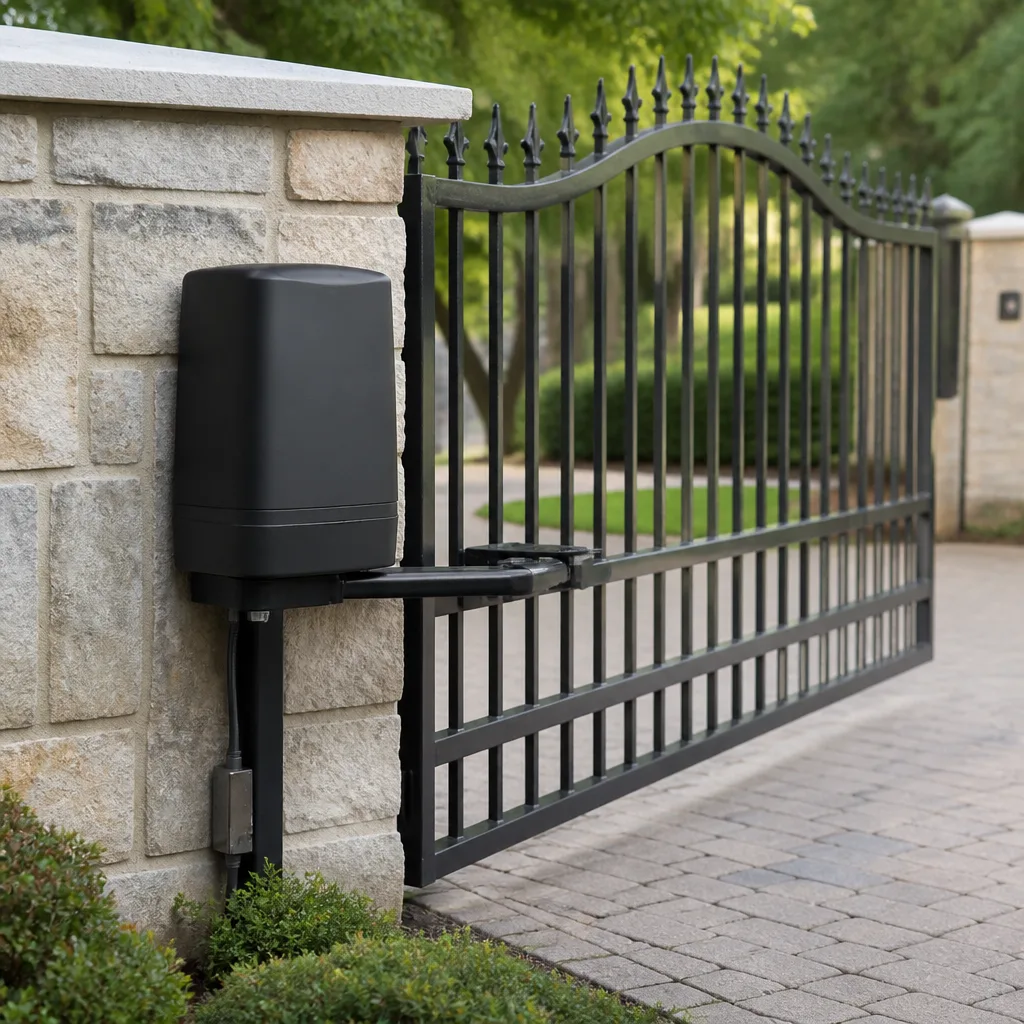
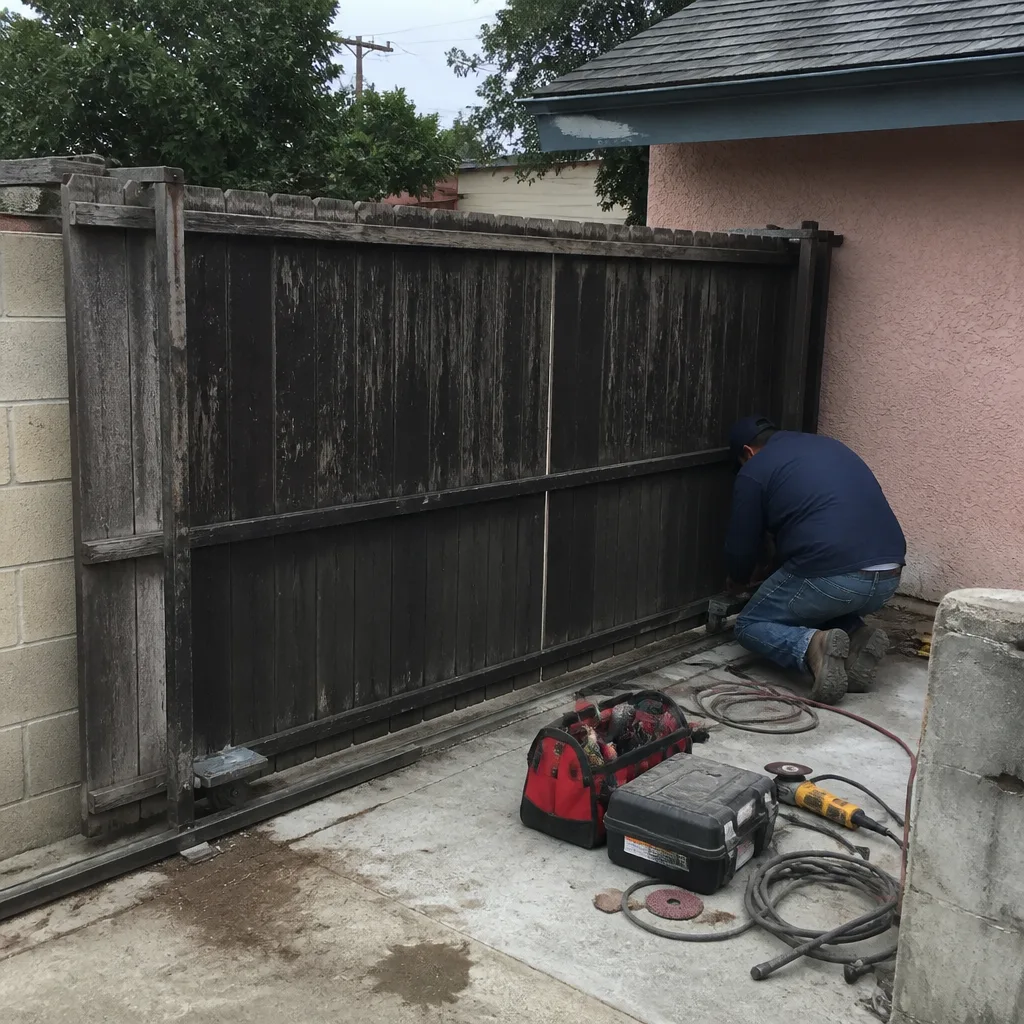 Before
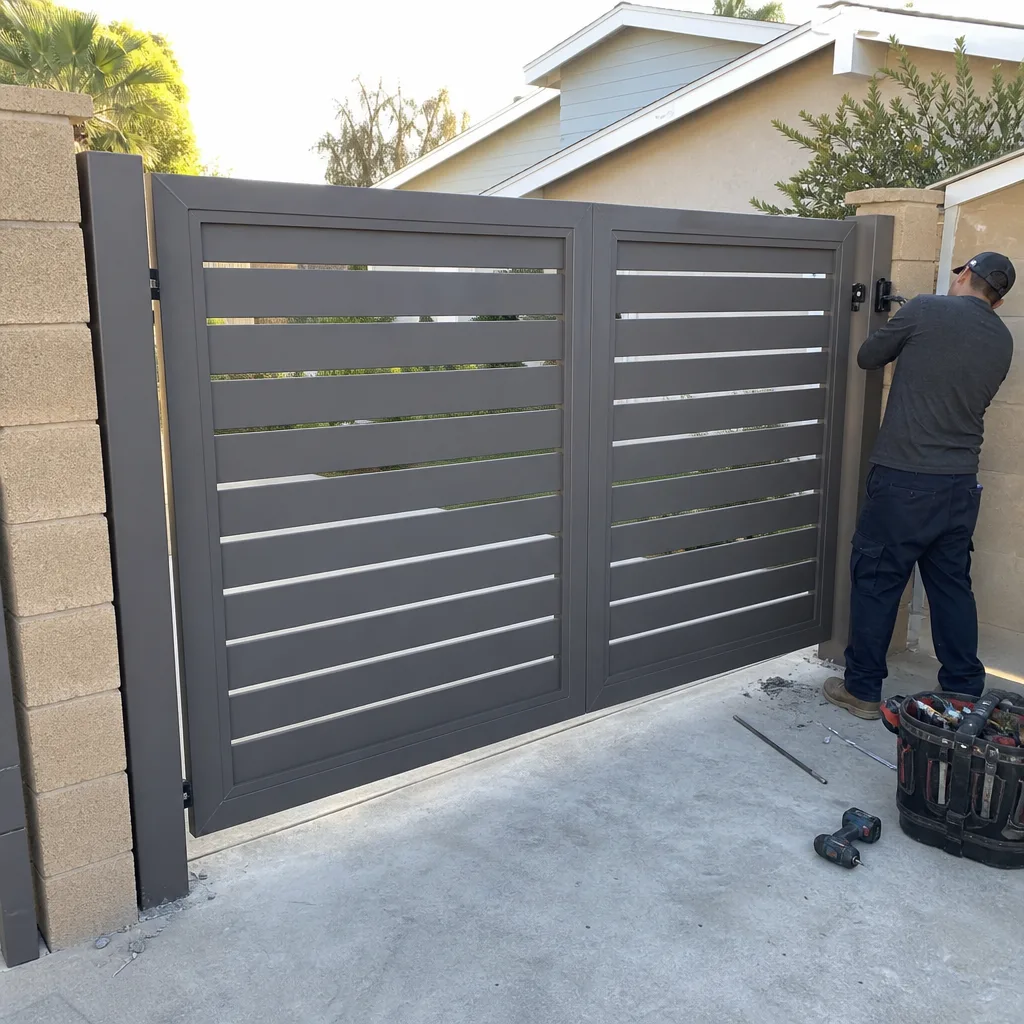 After
After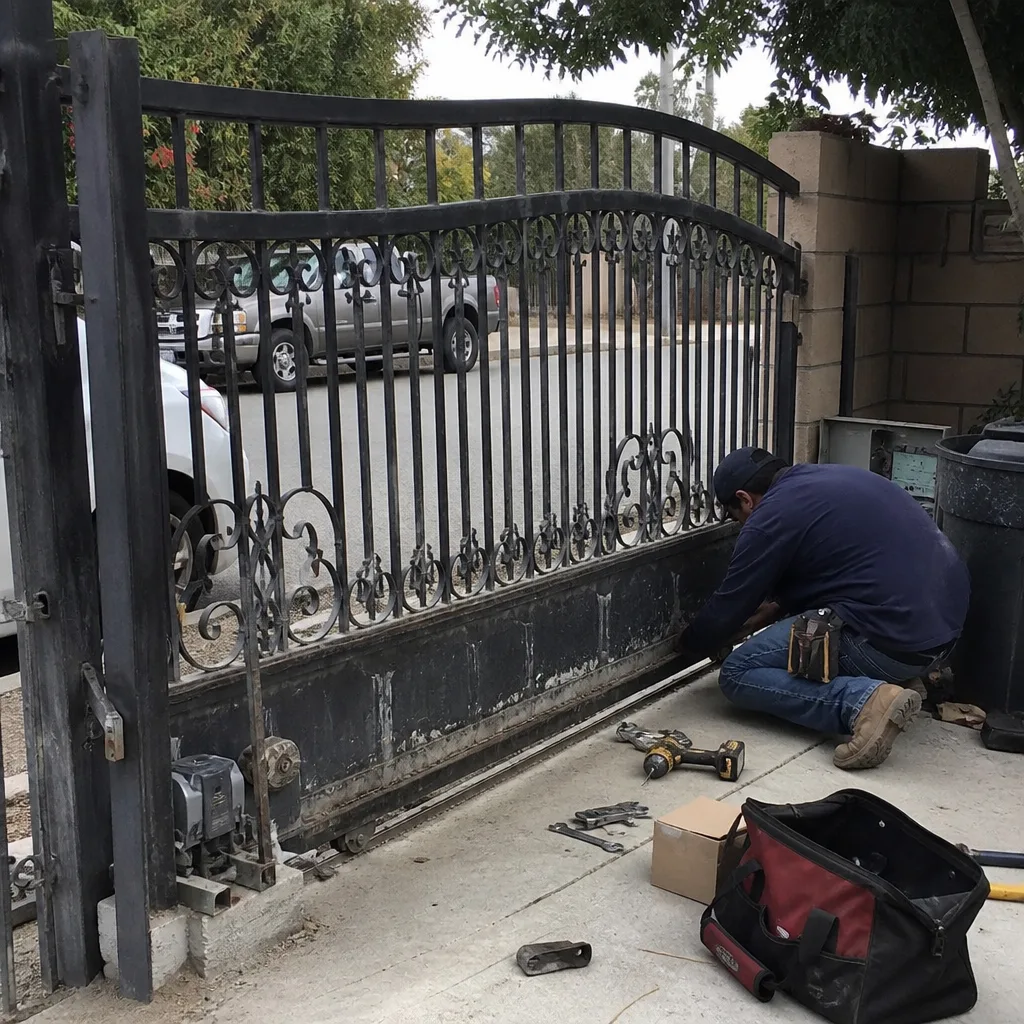 Before
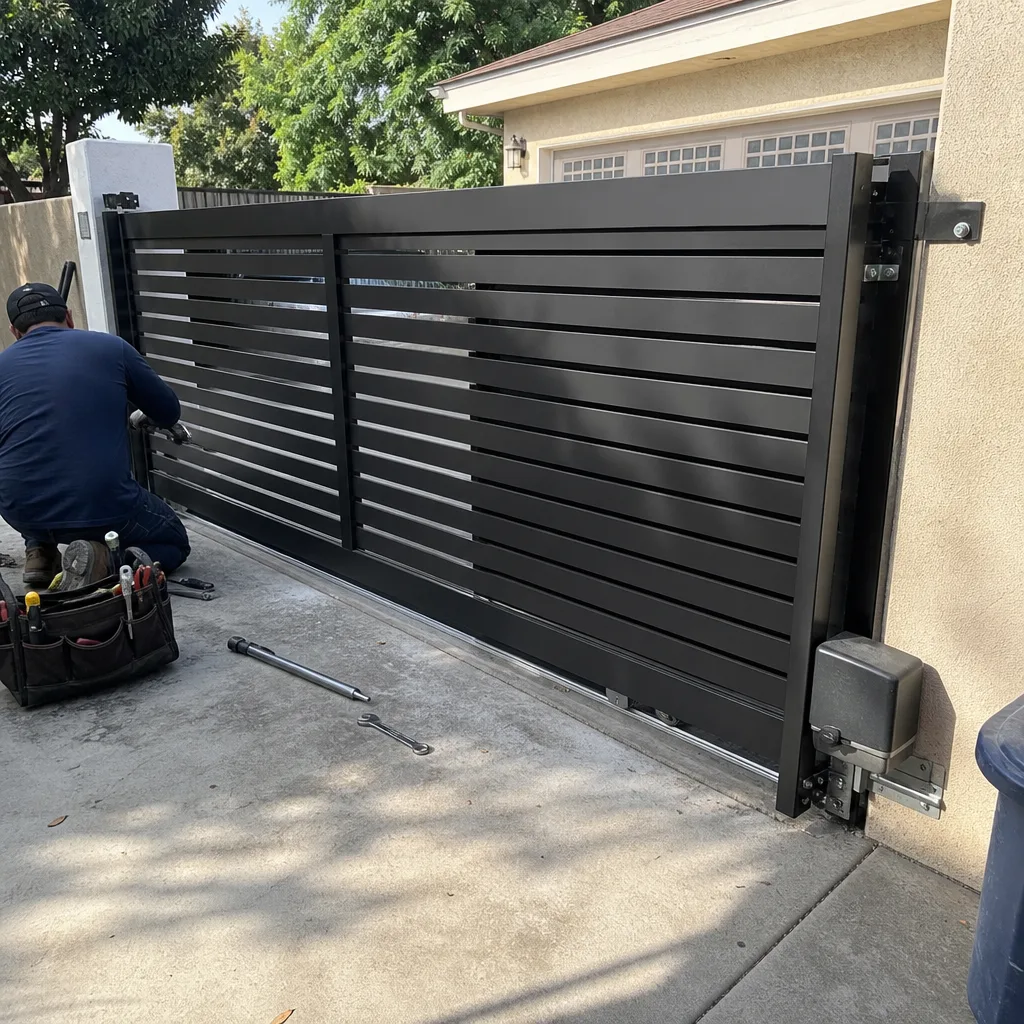 After
After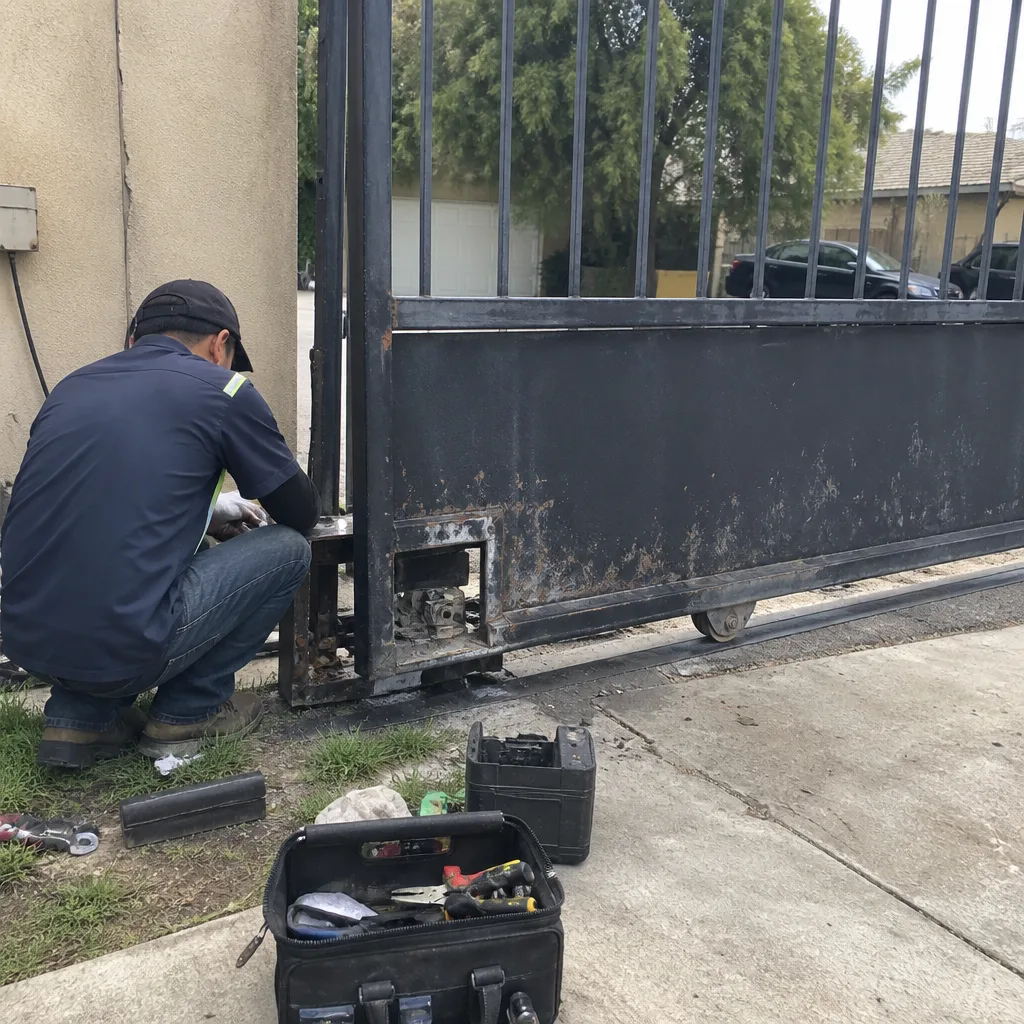 Before
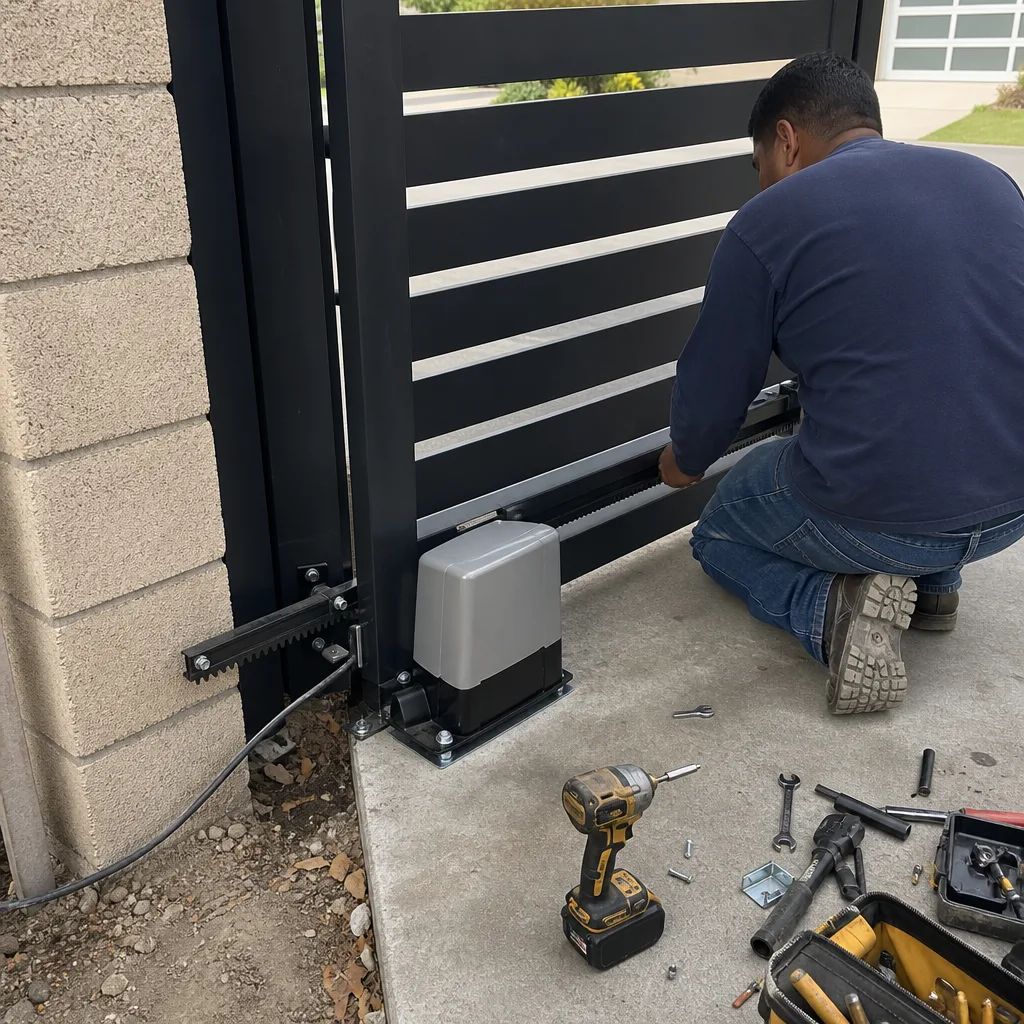 After
AfterGate Repair Warning Signs: A Cerritos Homeowner’s Reference Guide
Here is something most Cerritos homeowners don’t realize until it’s too late: a driveway gate almost never fails without warning. The breakdown that strands your car in the driveway or leaves your property unsecured at 11 p.m. was talking to you for weeks beforehand. A slight drag in the track, a pause before the motor engages, a hinge that creaks a half-second longer than it used to. These are not quirks. They are diagnostics. This guide walks you through exactly what to listen for, watch for, and feel for before a small problem becomes a full gate replacement. We’ve been repairing gates across Cerritos since 2013, and we’ve learned that the homeowners who catch these signs early are the ones who never meet us during an emergency.
Quick Answer
The most common gate repair warning signs in Cerritos are a gate that moves slower than normal, grinding or screeching during operation, a gate that sags or leans, a motor that hums but doesn’t move the gate, and keypads or remotes that work intermittently. If you notice any of these, have the gate inspected within two to three weeks. Left unaddressed, a dragging gate will eventually burn out the motor, and a sagging hinge will eventually snap, both of which cost significantly more than the early fix.
Table of Contents
- Sound: What Your Gate Is Telling You
- Movement: Speed, Jerking, and Stalling
- Alignment: Sagging, Leaning, and Gaps
- Motor and Opener Warning Signs
- Keypads, Remotes, and Access Control Failures
- How Cerritos Weather Affects Gate Hardware
- Common Mistakes to Avoid
- When to Call a Professional
- Frequently Asked Questions
- The Bottom Line
Sound: What Your Gate Is Telling You
Your gate speaks before it fails. The sounds it makes during operation are the earliest and most reliable warning system you have, and they cost nothing to monitor. A healthy gate makes a consistent, low mechanical sound. When that sound changes, the gate is telling you something specific.
Here are the sounds we hear most often on service calls across Cerritos, and what each one means:
- A high-pitched screech or squeal during movement: This is almost always a dry or failing bearing in a wheel, hinge, or roller. The metal is rubbing on metal without lubrication, and the friction is scoring the surface. If caught early, this is often a $15 bearing and fifteen minutes of work. If ignored, the scoring ruins the hinge or wheel assembly.
- A grinding or crunching sound from the motor area: The gear teeth inside the opener are wearing down, or debris has worked its way into the drive mechanism. Grinding means metal is being eaten away. Continuing to run the gate accelerates the damage.
- A rhythmic thumping or bumping as the gate travels: This indicates a flat spot on a wheel, a bent track section, or an obstruction in the track. The gate is riding over something it shouldn’t, and every pass is making it worse.
- A sharp metallic snap or pop when the gate starts moving: This is a hinge or weld under excessive stress. The gate frame has likely shifted, and the snap you hear is the metal flexing past its tolerance. This is a pre-break sound. We have replaced gates in Cerritos where the homeowner heard this snap for months before the hinge finally tore free of the post.
- A low hum with no movement: This is the motor trying to turn but failing. It usually means the capacitor is failing, the drive chain is jammed, or the gearbox has stripped. Do not keep pressing the remote. The motor will overheat and die.
The rule is simple: a change in sound is a change in condition. If your gate sounds different today than it did last month, something has worn, shifted, or broken. Write down what you’re hearing and when you hear it. That note will save a technician real diagnostic time, and it may save you a service call fee.
Movement: Speed, Jerking, and Stalling
A properly operating gate moves at a consistent, predictable speed from fully closed to fully open. When that speed changes, or when the movement becomes uneven, the gate is compensating for a problem. Watch your gate open and close three times this week. Pay attention to the travel pattern.
Here are the movement patterns that warrant attention:
- The gate runs noticeably slower than it did six months ago. Slower travel almost always means increased resistance somewhere in the system. The gate is dragging on the ground, a wheel is seizing, or the motor is losing power. The motor compensates by working harder, which shortens its lifespan. A gate that’s 20 percent slower today will be 40 percent slower in three months, and dead shortly after.
- The gate jerks or stutters during travel. This is not normal operation. Jerking indicates a mechanical obstruction: a bent track, a loose chain, a damaged wheel, or a hinge that’s binding. The motor is pushing through a bad spot on every cycle. That bad spot is concentrating wear on a single component until it fails.
- The gate pauses mid-travel, then continues. A pause usually means the automatic reverse feature is triggering. The gate’s safety system detects resistance and momentarily stops or reverses to prevent damage or injury. If nothing is physically in the gate’s path, the safety edge or photoelectric sensor may be misaligned, dirty, or failing.
- The gate stops halfway and won’t complete the cycle without another remote press. This points to a limit switch problem or a motor that’s overheating and tripping its thermal protection. The gate gets partway, the motor gets too hot, and it shuts down for safety. The more it happens, the more damage the heat does to the motor windings.
- The gate slams open or closed at full speed. A gate that accelerates hard and bangs into the stops is dangerous. The hydraulic or mechanical dampeners are worn out, or the opener’s force settings were never calibrated correctly. A slamming gate will eventually crack a weld, damage a hinge, or injure someone in the travel path.
In our experience across Cerritos neighborhoods, most gate movement problems start small. A homeowner notices the gate is “a little slower” and decides to live with it. By the time we’re called, the motor has been running against resistance for months, and the repair is no longer a simple adjustment. Address movement changes early.
Alignment: Sagging, Leaning, and Gaps
Gate alignment problems are the most visible warning sign, and the most underestimated. A gate that sags or leans is not a cosmetic issue. It is a structural problem that will get worse until something breaks, often at the worst possible moment.
Here is what to look for:
Sagging at the latch side
A sagging gate is one where the free end, the end opposite the hinges, sits lower than it should. You can see it in the gap between the two gate halves, or in the way the gate drags on the concrete. Sagging means the hinge hardware is wearing or the post is shifting. On a steel gate, the weight is substantial. A sagging gate puts leveraged force on the top hinge, which can tear free of the post, dropping the gate. This is a dangerous failure, particularly on a driveway with children or pets.
Leaning posts
Walk to the hinge post, the one the gate hangs from, and sight down it vertically. A post that leans means the foundation or footing is compromised. In Cerritos, where soil conditions can include expansive clay depending on the exact neighborhood, posts can shift over decades. A leaning post means the entire gate needs to be un-hung, the post re-set and re-anchored, and the gate re-hung. This is not a shim job. A shim is a temporary cover-up that fails.
Changing gaps
Look at the gap where the gate meets the latch post when closed. If that gap is wider at the top than the bottom, or if it’s changed over time, the gate structure is twisting. The same goes for the gap between a double gate’s two halves. Gates are hung to close with consistent clearance. A changing gap means the hinging geometry has shifted, and the gate is no longer hanging true. Left alone, the latch will stop engaging, which is its own security problem.
Scrape marks on concrete or pavers
Look at the ground directly under the gate’s free end. If you see scrape marks, the gate is touching down during travel. It may only touch at one point in the arc, but that contact is bending the gate frame slightly on every single cycle. Over months, that repeated flexing causes metal fatigue, especially at weld joints. This is how gates develop cracks that seem to appear overnight. They didn’t. They were flexing for months.
Alignment issues respond well to early intervention. A sag beginning at a quarter-inch gap change can often be corrected without replacing the gate. Wait until the gate is dragging badly, and you’re looking at new hinge hardware, possibly a new post, and real money.
Motor and Opener Warning Signs
The opener is the heart of an automated gate, and it is the component most likely to fail from neglect. Most gate openers installed in Cerritos homes are built to last 10 to 15 years under normal use. The warning signs of opener failure are specific and recognizable.
Listen and watch for these:
- Sluggish response from the remote: You press the button, and there’s a noticeable delay before the gate moves. This can be a failing receiver, but it’s more often a motor capacitor losing its ability to deliver the starting jolt. The capacitor is a small, inexpensive part that prevents a much bigger motor replacement.
- The opener starts, struggles, then stops and reverses: This is the motor’s current-sensing system detecting an overload, or a thermal cutout engaging. Either way, the motor is being asked to do more than it can. The cause may be mechanical drag (a wheel, a hinge, a track) rather than the motor itself. A diagnostic visit separates the true cause from the symptom.
- Burning smell after operation: Electrical components give off a distinctive smell when they overheat. If you notice an acrid, electrical smell near the opener after the gate cycles, shut the system off at the breaker and call for service. That smell means insulation is breaking down inside the motor or a capacitor is getting ready to fail.
- Visible wear on the drive chain or belt: A chain that sags visibly or shows shiny wear spots is stretched. A belt that’s cracked or glazed is slipping. Both are wear items with predictable lifespans. Replacement before failure is a maintenance cost. Replacement after failure is a repair cost plus whatever damage the failure caused.
- Battery backup beeping: Many Cerritos gate openers include a battery backup so the gate still works during power outages. If the unit beeps or shows a warning light, the battery has failed its self-test and needs replacement. Ignore it, and the next power outage leaves the gate manual-only, or worse, dead in the open position.
We service operators from Viking, FAAC, BFT, Linear, and five other major brands, and the failure patterns are consistent regardless of manufacturer. The motor that gets regular maintenance and prompt attention to small issues will outlast its neglectful twin by years. The small issue today is always cheaper than the motor tomorrow.
Keypads, Remotes, and Access Control Failures
The mechanical side of the gate can be perfect, and the gate still won’t open if the access control system is failing. In Cerritos, where many households have multiple drivers, service workers, and package deliveries, access control matters every single day.
These are the access system warning signs to take seriously:
- Intermittent keypad response: Sometimes the code works on the first try, sometimes it takes three attempts, sometimes it doesn’t work at all. Intermittent keypad response usually means corroded contacts inside the keypad housing, a failing wiring connection at the opener, or water intrusion. Cerritos sees enough humidity and the occasional heavy rain to test every outdoor electrical connection.
- A remote works only at very close range: Range shrinking over time means the remote battery is dying (easiest fix), the receiver antenna is damaged, or the receiver itself is losing sensitivity. A remote that worked from the street and now works only from the driveway is giving you a clear warning.
- The gate opens but won’t close automatically, or closes but won’t open: This one-sided failure pattern is classic limit switch or safety sensor trouble. The system never receives the signal that the gate reached the correct position, so it refuses to complete the cycle. Safety sensors are safety equipment. Never bypass them to force the gate to work. The sensor issue is fixable, and the bypass is a liability.
- Phantom activations: The gate opens on its own at odd hours, or closes unexpectedly. This can be a stuck remote button (check the one in the glovebox), a short in the wiring, or radio interference. It can also be a failing control board generating spurious signals. Phantom activations are a security concern as much as an operational one.
- Multiple remotes failing at different times: If you replace the battery in one remote and it works again, while another remote still struggles, you have individual remote issues. If all remotes fail at the same time regardless of battery, the problem is at the receiver or control board. This distinction saves a lot of diagnostic time.
Access control faults are frustrating because they waste minutes of your day, every day, until they waste an entire morning. Most keypad and receiver problems in the Cerritos area are repairable in a single service visit. The parts are usually in the truck.
How Cerritos Weather Affects Gate Hardware
Gate hardware lives outdoors. It endures everything the weather delivers, every year, without a break. In Cerritos, the climate is generally mild, but it is not neutral. Specific weather patterns here accelerate specific kinds of gate wear, and a homeowner who understands the local conditions can spot problems before they escalate.
Here is what Cerritos weather does to gate systems:
- Coastal humidity and morning marine layer: Cerritos sits close enough to the coast to get regular morning moisture, particularly in the late spring and early summer. That damp air condenses on cool metal in the early morning hours. Over years, it contributes to surface rust on untreated steel, corrosion on electrical terminals, and the slow degradation of outdoor keypads and photocell housings. A gate that looks fine in the afternoon may have been collecting moisture at dawn for a decade.
- Thermal expansion and contraction: Cerritos sees temperature swings between summer afternoons and winter nights. Steel expands when hot and contracts when cold. Over years, those cycles work on welds, bolts, and brackets. A weld that held perfectly for ten years can develop a hairline crack, not from a single impact, but from ten thousand small expansions and contractions. This is why commercial-grade gates are engineered with expansion in mind.
- Dust and debris in the dry season: When the weather turns dry, airborne dust coats everything. On a gate system, dust works its way into the opener’s drive mechanism, into hinges and wheel bearings, and onto safety sensor lenses. Dust mixed with existing grease makes a grinding paste that accelerates wear. The annual tune-up matters more in dry years than wet ones.
- Santa Ana winds: The Santa Ana events that sweep through Los Angeles County hit Cerritos with gusts that can push hard against a closed gate, especially a solid steel or composite one. The gate acts like a sail. The motor holds it closed against resistance, and the hardware absorbs the repeated stress. We see more hinge and opener issues after significant wind events.
None of these factors doom your gate. They simply mean that a gate in Cerritos requires a certain baseline of attention that a gate in a different climate might not. The seasonal tune-up exists for exactly this reason. A set of eyes on the hardware twice a year catches what the weather is doing before it becomes a repair.
Common Mistakes to Avoid
- Lubricating without cleaning first: Spraying new grease onto dirty, gritty hinges creates a grinding compound that eats metal faster than no lubricant at all. The correct sequence is clean, then lubricate, then wipe excess. Every time.
- Ignoring that the gate is “a little slower”: Slower means resistance, and resistance means the motor is working harder than designed. Motor replacement costs 10 to 20 times what the original resistance problem would have cost to fix.
- Adjusting force settings to “fix” a dragging gate: Increasing the opener’s force limit lets the gate muscle through the obstruction. It also over-stresses the motor, the chain, the hinges, and the gate frame. You’re not fixing the problem. You’re distributing the damage.
- Using a general handyman for opener or automation work: Gate automation is a specialized trade. The electronics, safety sensors, and programming require brand-specific training. A handyman who can weld a post cannot necessarily diagnose a Viking control board, and a botched automation repair can leave a gate unsafe.
- Waiting until the gate stops working to call: This is the most expensive habit we see in Cerritos. Every warning sign in this guide is an early intervention opportunity. The homeowner who calls at the first creak gets a small bill. The one who calls when the gate is stuck gets a big one.
- Replacing the remote battery every time the gate acts up: A fresh battery masks the real problem for a few days, then the symptom returns. If a new battery doesn’t produce a lasting fix, the issue is upstream in the receiver or control board.
- Propping a broken gate open “until the weekend”: A gate that is propped or tied open is not securing anything. It also places strain on the hardware at odd angles, which can bend hinges and damage the opener’s travel limits. Make the call when the gate fails, not when it is convenient.
When to Call a Professional
Some gate issues are a five-minute homeowner fix: tighten a loose bolt, clear a twig from the track, replace a remote battery. Others are not. Call a professional when the gate is sagging or leaning, when the motor hums without moving the gate, when there is a burning smell near the opener, when safety sensors are involved, or when the gate slammed and then stopped working entirely. These are not DIY situations. Attempting a hinge repair on a heavy steel gate without proper equipment is genuinely dangerous. High-tension hardware holds enormous stored energy. The same goes for electrical work on an opener. We have seen homeowner repairs that took a $200 fix and turned it into a $2,000 replacement. Ironworks Gate Co. offers free estimates in Cerritos. Call (747) 298-3226, describe what you’re seeing, and get a straight answer about whether it’s urgent, whether it’s safe, and what it will cost. No pressure, no obligation, and a real person answers 24 hours a day.
Frequently Asked Questions
Gate repair in Cerritos typically ranges from $150 to $600 for most common issues: hinge replacement, wheel or roller replacement, capacitor replacement, limit switch adjustment, or keypad wiring repair. Opener replacement runs higher, generally $800 to $2,500 depending on the brand and horsepower. Full gate replacement can range from $2,000 to $8,000 or more based on size, material, and automation. Every job we quote is priced and agreed before any work starts, and every repair over $250 gets $50 off. Call (747) 298-3226 for an exact quote. Estimates are free.
In most cases, yes. We carry common parts for Viking, FAAC, BFT, Linear, and five other opener brands on the truck, along with a full range of hinges, wheels, and hardware. Most Cerritos repair calls are completed same-day or next-day. If the part is unusual or the gate requires a custom weld, we’ll give you an honest timeline right then. Call (747) 298-3226 any time. A live person will pick up.
An open gate is an unsecured driveway. If you must leave it, lock any interior garage doors and vehicles, and remove valuables from the driveway area. Then call us at (747) 298-3226. We answer 24/7, and in Cerritos, a stuck-open gate is treated as an urgent call. We will get you closed or secured as quickly as possible, even if a full repair has to wait for parts.
A full installation includes the gate itself, hinge hardware, posts or post modification, the opener and arm, safety edges or photoelectric sensors, keypad and remote programming, and a final safety check of every travel path. We also handle the low-voltage wiring run from the house to the gate. If the gate needs 120-volt power at the post and there is none, an electrician is required by code. We coordinate that work so you have one point of contact. Free measure and written quote, always. Call (747) 298-3226 to schedule.
Yes. We run all low-voltage control wiring, install and align safety edges and photocells, and program the opener to current safety standards. Any line-voltage electrical work from the panel to the gate post is done by a licensed electrician, and we will arrange that so the entire job is coordinated from start to finish. The safety check after installation is not optional. Call (747) 298-3226 and we’ll explain exactly what your property needs.
A properly maintained gate opener in the Cerritos climate typically lasts 10 to 15 years. The marine layer and coastal humidity shorten that lifespan for units that are never serviced, especially if the control board housing isn’t sealed properly. A wire-brush cleaning of terminals, a battery check, and a force-setting verification every year will extend the life of any opener, usually past the manufacturer’s expected service life. Our $89 seasonal tune-up exists for exactly this reason. Call (747) 298-3226 to book one.
The Bottom Line
Your gate was built to move hundreds of thousands of times, but it gives you notice when something is wrong. The screech, the sag, the slowdown, the intermittent keypad: these are not random annoyances. They are specific, readable signals about specific, fixable problems. Cerritos homeowners who act on the early warning signs get repaired gates. Those who wait get replaced gates. If you’ve noticed any of the signs in this guide, call (747) 298-3226. A real person answers, the estimate is free, and the price is settled before we touch a single bolt. We are the Ironworks Gate Co. home team, proud to serve Cerritos and the surrounding communities, and every job we complete is backed in writing.
Written by Victor Salinas, Owner at Ironworks Gate Co., serving Cerritos since 2013.